Toilet Cubicle: Types, Materials, Benefits & How to Choose the Right System
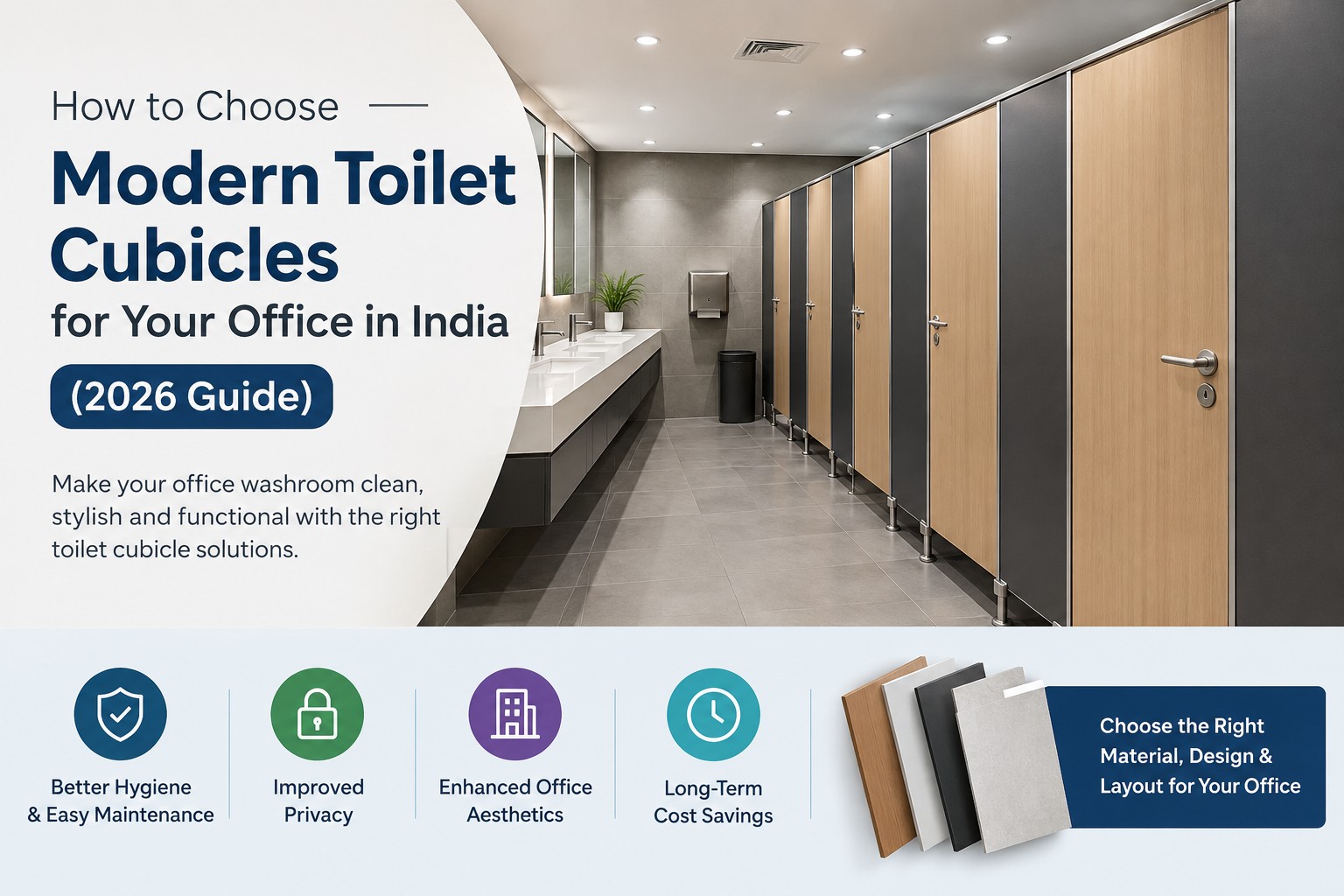
Planning a commercial washroom involves several important decisions, from selecting sanitary fittings and flooring to creating comfortable and private spaces for users. One element that deserves equal attention is the toilet cubicle system. A well-planned cubicle layout helps organise the available space, provides individual privacy and makes everyday washroom use more convenient.
Toilet cubicles are widely used in offices, shopping malls, hotels, educational institutions, hospitals and industrial buildings. They are available in different materials, designs, colours and configurations, allowing businesses to select a system that matches their building requirements.
However, choosing the right toilet cubicle is not just about appearance. Panel construction, material quality, thickness, hardware, moisture exposure, installation and expected daily usage all play an important role in the final selection.
Whether you are developing a new commercial washroom or upgrading an existing facility, understanding these factors can help you make a more informed purchasing decision.
In this guide, Galaxy Cubicle India covers the different types of toilet cubicles, commonly used materials, their benefits, dimensions, pricing factors and practical considerations to check before ordering a washroom partition system.
What Are Toilet Cubicles?
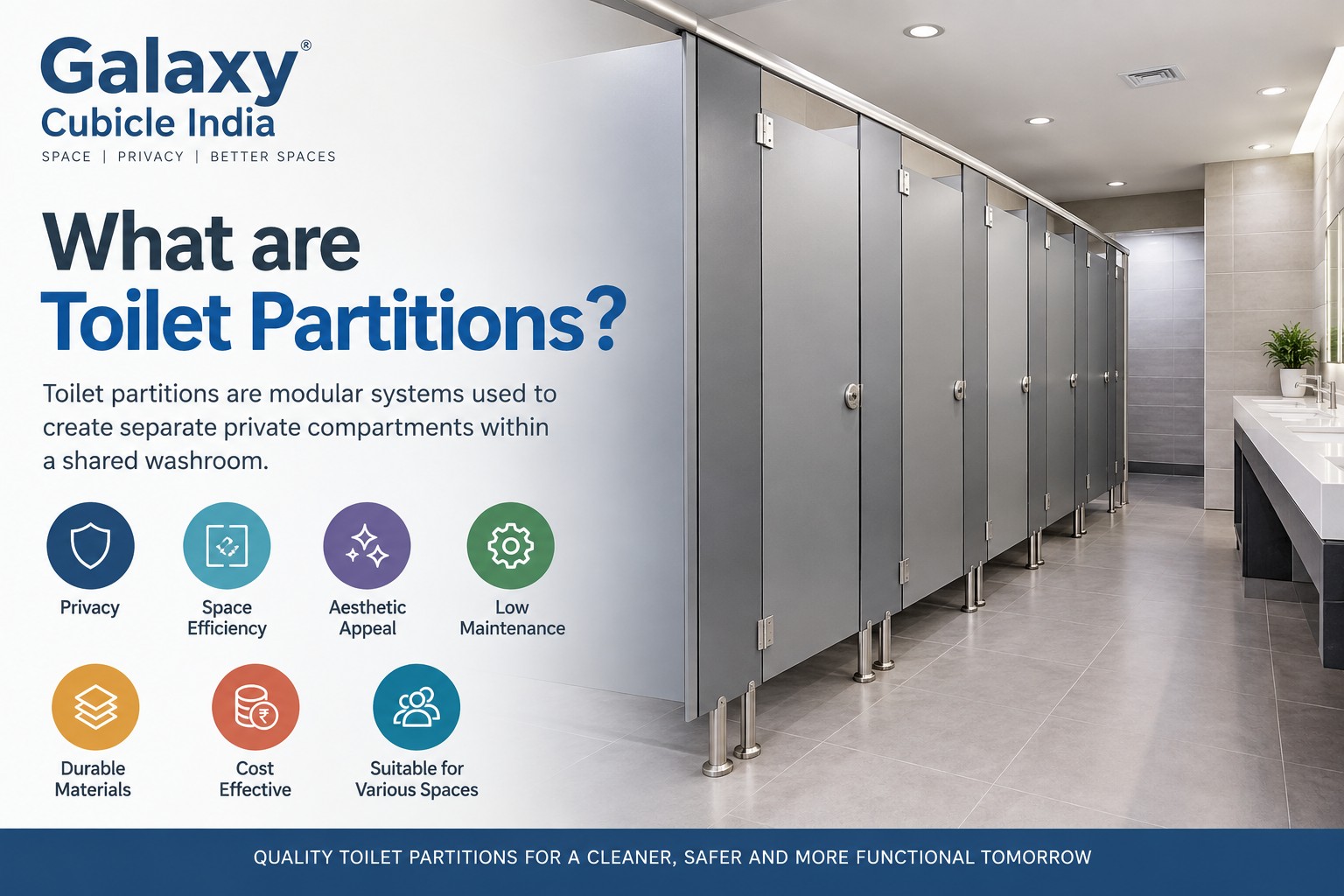
Toilet cubicles are modular partition arrangements designed to create separate toilet compartments within a shared washroom. They use individual panels, doors and supporting fittings to divide a common area into private spaces.
Unlike conventional brick or masonry partitions, modular toilet cubicle systems are assembled using prefabricated panels and suitable hardware. Their layout can be planned according to the available floor area, plumbing positions and number of compartments required.
A typical toilet cubicle installation includes the following components:
- Partition Panels: Form the side divisions between individual toilet compartments.
- Cubicle Doors: Provide entry and privacy for each compartment.
- Supporting Profiles: Aluminium channels or other suitable supports help hold the panels in position.
- Hinges: Allow the doors to open and close properly.
- Locks and Indicators: Help users secure the compartment and identify whether it is occupied.
- Adjustable Legs: Support the structure and provide the required floor clearance.
- Handles and Brackets: Assist with everyday operation and structural fixing.
All these components work together to create a functional washroom partition system. The exact arrangement depends on the selected material, design and project specifications.
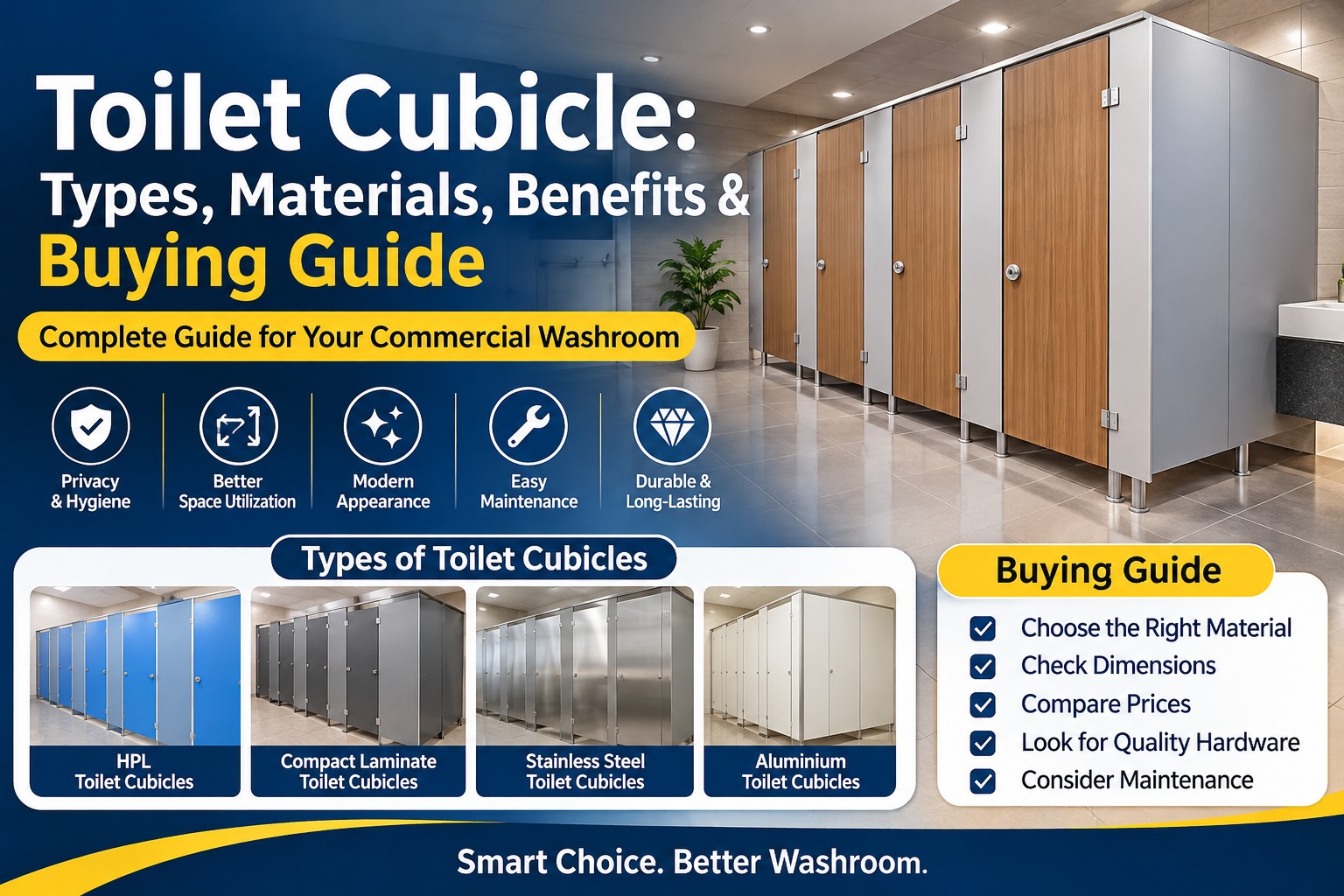
Different Types of Toilet Cubicles for Commercial Washrooms
The choice of material affects the appearance, construction, maintenance and suitability of a toilet cubicle. Before selecting a system, it is useful to understand how the commonly available options differ.
1. HPL Toilet Cubicles
High Pressure Laminate (HPL) is a decorative laminate material commonly considered for commercial washroom partitions. It is produced by compressing resin-treated layers under high pressure and temperature.
HPL toilet cubicles are available in a variety of colours, patterns and surface finishes. This makes them suitable for projects where the washroom design needs to complement the overall interior.
Key features of HPL toilet cubicles:
- Available in multiple colours and decorative patterns.
- Different surface finishes for commercial interiors.
- Suitable options for various office and institutional applications.
- Can be fabricated into different panel and door configurations.
- Allow coordination with the building's interior design.
Where are HPL toilet cubicles used?
HPL partitions can be considered for corporate offices, educational buildings, hotels, shopping centres and other commercial properties.
When purchasing HPL cubicles, check the board construction, grade, thickness, core material and moisture suitability. The term HPL alone does not describe the complete performance of the finished panel.
2. Compact Laminate Toilet Cubicles
Compact laminate is a dense, self-supporting panel material manufactured by compressing multiple resin-impregnated layers under high pressure and temperature.
Unlike a decorative laminate bonded to a separate core, compact laminate has a solid construction throughout the panel thickness. This makes it a popular option for commercial washrooms where regular cleaning, moisture exposure and frequent use need to be considered.
Important features of compact laminate cubicles:
- Solid panel construction throughout the thickness.
- Suitable grades for moisture-exposed washroom environments.
- Available in different thicknesses and finishes.
- Can be fabricated into partition panels and cubicle doors.
- Suitable for many demanding commercial applications.
Compact laminate toilet cubicles are commonly considered for shopping malls, airports, schools, hospitals and public facilities.
Before finalising the product, review the manufacturer's technical specifications, panel grade, thickness and recommended installation conditions.
3. Stainless Steel Toilet Cubicles
Stainless steel toilet cubicles are an option for projects that require a metal-based partition system.
They provide a clean and professional appearance and can be considered for commercial, institutional and industrial washroom environments.
However, the quality and long-term suitability of a stainless steel cubicle depend on several factors, including:
- Stainless steel grade.
- Sheet thickness.
- Surface finish.
- Fabrication and joint quality.
- Corrosion resistance.
- Hardware and fixing arrangements.
Before purchasing stainless steel partitions, ask the manufacturer for the material grade and specifications instead of comparing products based only on their appearance.
4. Aluminium Toilet Cubicles
Aluminium is widely used in modular washroom systems, particularly for supporting profiles, channels, frames and fittings.
Aluminium-based cubicle systems can be designed according to the required panel arrangement, finish and project layout.
Some important factors to evaluate include:
- Aluminium profile quality.
- Profile dimensions and thickness.
- Joint and connection design.
- Surface coating or finish.
- Panel compatibility.
- Supporting and fixing arrangements.
The supporting framework and panel material should be selected as a compatible system to ensure proper installation and everyday functionality.
HPL vs Compact Laminate Toilet Cubicles: Which Is Better?
HPL and compact laminate are two materials frequently considered when planning commercial toilet cubicles. Although they can offer similar decorative finishes, their internal construction is different.
Understanding this difference helps buyers select the appropriate material for their washroom requirements.
| Comparison Factor | HPL | Compact Laminate |
|---|---|---|
| Construction | Decorative laminate bonded to a suitable core | Solid laminate construction throughout |
| Appearance | Multiple colours and finishes | Multiple colours and finishes |
| Panel Structure | Depends on core material | Dense, self-supporting panel |
| Moisture Suitability | Depends on grade and core | Suitable grades available for moisture-exposed applications |
| Fabrication | Depends on the complete board specification | Can be fabricated into doors and partitions |
| Selection Factor | Core, grade and thickness | Panel grade, thickness and construction |
When Should You Choose HPL?
HPL may be worth considering when decorative finishes, interior coordination and the selected board specifications are important factors in the project.
It is important to confirm that the core material and complete board construction are suitable for the intended washroom environment.
When Should You Choose Compact Laminate?
Compact laminate is worth evaluating when a washroom requires solid panel construction and is exposed to frequent cleaning and regular moisture.
The selected grade, thickness and installation arrangement should match the actual usage conditions.
Buying tip: Do not select a toilet cubicle material based only on colour or surface appearance. Compare the complete panel construction and technical specifications before making a decision.
7 Important Benefits of Installing Toilet Cubicles
A properly designed toilet cubicle system contributes to the functionality and organisation of a shared washroom. Here are some of the important advantages.
1. Individual Privacy for Users
Privacy is one of the main reasons businesses install toilet cubicles. Separate doors and partition panels create individual compartments within a common washroom.
The overall privacy level depends on panel height, door design, floor clearance and the gaps between adjoining components.
2. Better Utilisation of Available Space
Modular toilet partitions allow a common washroom area to be divided into multiple compartments.
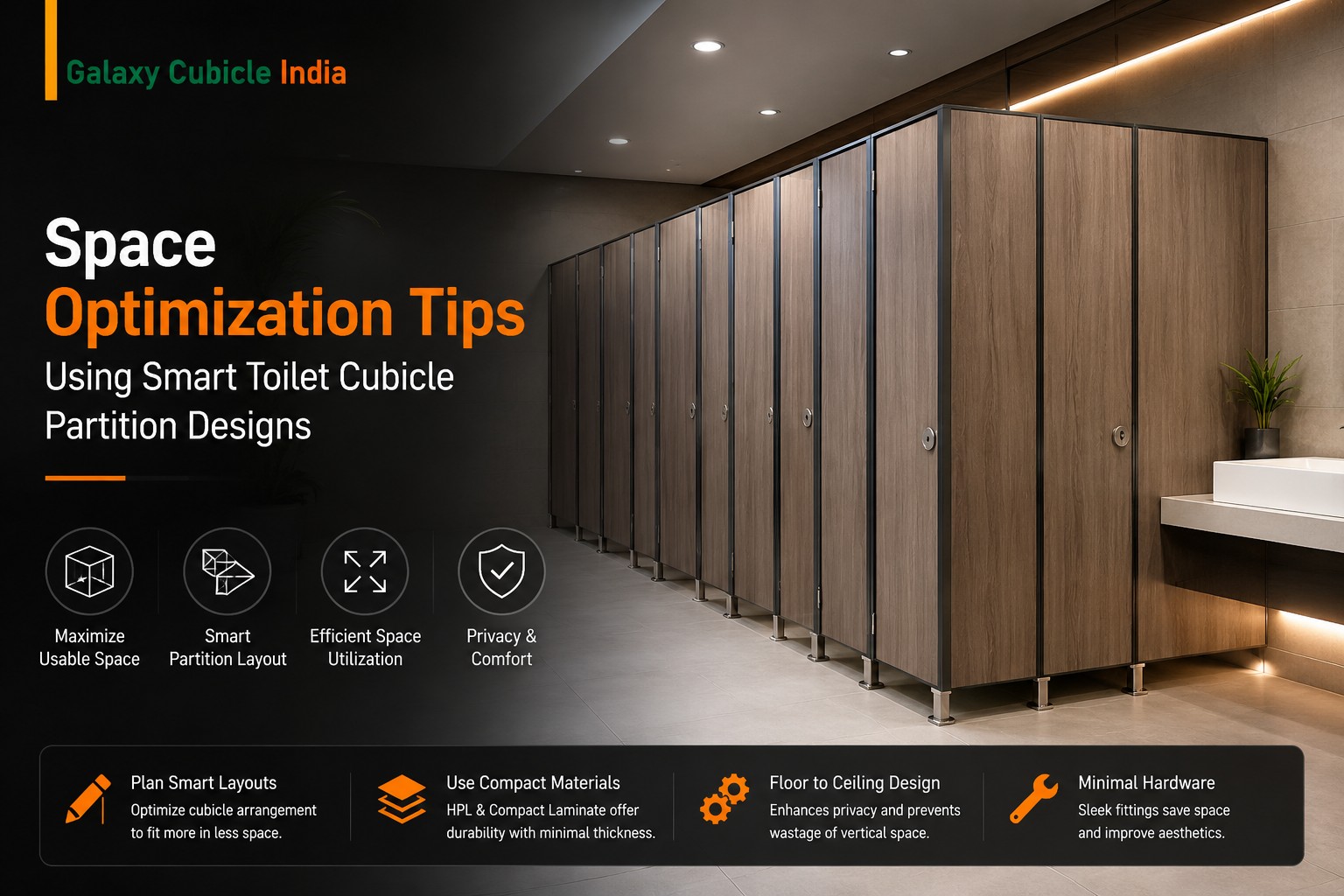
The layout can be planned according to the available floor space, plumbing positions and expected number of users. This helps architects and facility managers organise the washroom more effectively.
3. Improved Washroom Appearance
The appearance of a commercial washroom contributes to the overall impression of a building.
Toilet cubicles are available in different colours, textures and finishes, making it easier to coordinate partitions with flooring, wall tiles and other interior elements.
4. Convenient Cleaning and Maintenance
Suitable panel surfaces can make routine washroom cleaning easier.
However, maintenance requirements also depend on the material, panel edges, hardware, joints and cleaning products used. Following the manufacturer's maintenance instructions helps protect the selected finish.
5. Flexible Design and Configurations
Modular cubicle systems can be planned for different washroom layouts.
Door positioning, panel dimensions, supporting profiles and compartment arrangements can be selected according to the available space and project requirements.
6. Suitable for Different Commercial Buildings
Different panel materials and configurations allow businesses to select a toilet cubicle system according to the environment.
A small office washroom, a busy shopping mall and an industrial facility may all require different material and hardware specifications.
7. Better Organisation of Shared Facilities
Separate toilet compartments help organise common washrooms and provide individual spaces for employees, visitors, customers and students.
This makes the facility more convenient to use in buildings with multiple occupants.
Where Are Commercial Toilet Cubicles Used?
Toilet cubicles are used in almost every type of commercial or institutional building where separate toilet compartments are required.
Corporate Offices: Office washrooms need practical compartment layouts that provide privacy for employees and visitors while complementing the workplace interior.
Shopping Malls: High-footfall facilities require carefully selected materials, suitable hardware and practical layouts for regular use.
Hotels and Restaurants: The cubicle finish and design can be selected to coordinate with the property's interior theme.
Schools and Colleges: Washroom planning should consider student requirements, privacy, cleaning and everyday maintenance.
Hospitals and Healthcare Facilities: Material suitability, hygiene, accessibility and cleaning requirements should be evaluated carefully.
Factories and Industrial Buildings: The selected partition system should match the working environment, cleaning frequency and expected usage.
Airports and Public Buildings: Facilities with heavy daily footfall need suitable panel specifications, reliable hardware and well-planned compartment arrangements.
How to Choose the Right Toilet Cubicle for Your Project
Selecting a toilet cubicle system involves more than comparing designs and quotations. The following factors can help you evaluate different products before placing an order.
1. Measure the Available Washroom Area
Start with accurate measurements of the proposed installation area.
Check the following details:
- Total available floor area.
- Washroom entrance position.
- Plumbing and sanitary fitting locations.
- Wall conditions and fixing points.
- Available walking and circulation space.
- Number of compartments required.
These measurements help determine the practical arrangement of the cubicles.
2. Select a Suitable Panel Material
Different materials have different constructions and maintenance requirements.
Compare HPL, compact laminate, stainless steel and aluminium-based systems according to the intended application.
Consider moisture exposure, daily footfall, cleaning frequency, design requirements and project budget before selecting a material.
A product suitable for a low-usage office washroom may not necessarily be appropriate for a busy public facility.
3. Check Panel Thickness and Construction
Panel thickness is an important specification when comparing toilet cubicle products.
Ask the manufacturer about:
- Available thickness options.
- Actual panel construction.
- Material grade.
- Suitable applications.
- Supporting framework requirements.
The selected thickness should be compatible with the panel dimensions, door size and complete installation arrangement.
4. Evaluate Hinges, Locks and Other Hardware
Toilet cubicle hardware is used repeatedly throughout the day. Its quality affects the everyday operation of the system.
Before confirming your order, check:
- Hinge material and finish.
- Lock and indicator mechanism.
- Handle design.
- Bracket quality.
- Adjustable leg arrangement.
- Compatibility with the selected panels.
Also ask about replacement fittings and hardware availability for future maintenance.
5. Consider Door Design and Privacy Requirements
The door and partition arrangement should provide the required privacy and convenient access.
Review the overall panel height, door width, floor clearance and gaps between adjoining panels.
The layout should also consider the needs of different users and any applicable accessibility requirements.
6. Select the Right Colour and Finish
The finish of a toilet cubicle can influence the overall washroom appearance.
Choose a colour or texture that works with the building's flooring, wall finishes and interior design.
If possible, request actual material samples before finalising the selection. This allows you to evaluate the finish under the lighting conditions of the project.
7. Compare the Complete Project Quotation
The lowest initial quotation does not always represent the best overall value.
Before making a decision, compare:
- Material type and grade.
- Panel thickness.
- Number of compartments.
- Door and partition dimensions.
- Hardware specifications.
- Colour and finish options.
- Site measurement requirements.
- Transportation.
- Installation charges.
A detailed quotation makes it easier to understand what is included in the proposed toilet cubicle system.
Toilet Cubicle Dimensions: Important Measurements to Consider
Toilet cubicle dimensions are not identical for every project. The required size depends on the building layout, available floor area, intended users and applicable building regulations.
Before finalising the design, consider the following measurements.
Compartment Width: The width should allow comfortable movement and sufficient space for the intended sanitary fittings.
Compartment Depth: The depth should be planned according to the toilet fixture, door arrangement and available circulation space.
Partition Height: Select a suitable height based on privacy requirements and the overall design.
Door Width: The door should provide convenient entry and exit without interfering with nearby compartments.
Floor Clearance: The gap between the panel and floor should be considered according to cleaning access, privacy and installation requirements.
Accessible Toilet Compartments: Where required, accessible washrooms should include suitable dimensions, clear floor space, door arrangements and support features in accordance with applicable accessibility standards and building regulations.
There is no universal measurement that should be copied for every installation. Final dimensions should be confirmed through a proper site assessment.
What Factors Affect Toilet Cubicle Prices in India?
The cost of toilet cubicles varies according to the material, design and installation requirements of each project.
Two commercial washrooms with the same number of compartments may have different quotations because their dimensions, hardware and panel specifications are not necessarily the same.
Here are the main factors that influence toilet cubicle pricing:
1. Material Selection: HPL, compact laminate and metal-based systems have different constructions, grades and costs.
2. Panel Thickness: The selected thickness influences the material requirement and overall system specification.
3. Number of Compartments: More doors and partition panels increase the total material and hardware requirements.
4. Hardware Specifications: Hinges, locks, handles, brackets and supporting fittings contribute to the complete project cost.
5. Customisation: Special colours, decorative finishes and customised configurations may affect the quotation.
6. Installation Requirements: Site conditions, fixing arrangements and installation complexity influence the overall expenses.
7. Transportation: Delivery distance, project location and material quantity may also affect the final price.
How Can You Get an Accurate Toilet Cubicle Quotation?
For a project-specific estimate, share the following information with the manufacturer:
- Approximate washroom dimensions.
- Number of required compartments.
- Preferred panel material.
- Required colour or finish.
- Project location.
- Installation requirements.
Providing these details helps the manufacturer understand your requirements and prepare a more relevant quotation.
Why Choose Galaxy Cubicle India for Toilet Cubicle Solutions?
Selecting a suitable manufacturer is an important part of planning a commercial washroom. The quality of the finished installation depends on material selection, panel fabrication, hardware compatibility and proper installation.
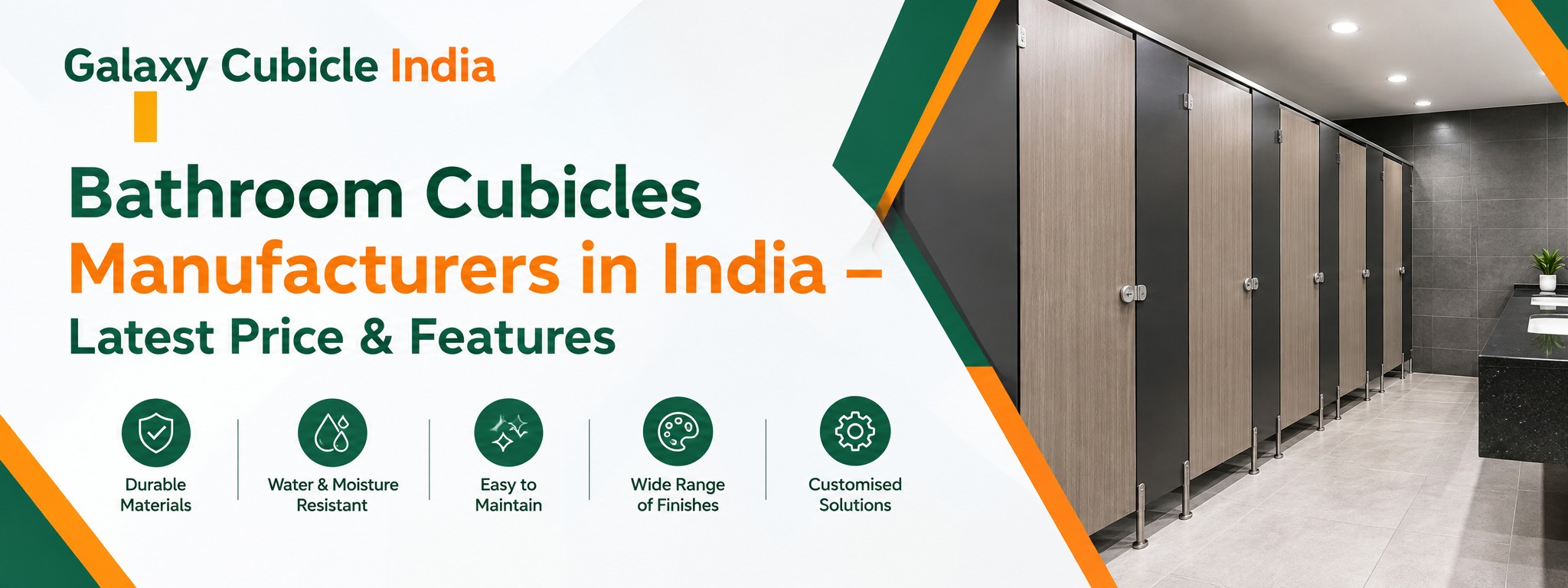
Galaxy Cubicle India offers toilet cubicle and washroom partition solutions for commercial and institutional projects.
The product range includes different partition options, including HPL, stainless steel and aluminium-based systems. Configurations can be considered according to the project layout, material preferences and intended application.
Whether you are planning a corporate office, hotel, shopping mall, educational institution or industrial facility, understanding the site requirements is the first step towards selecting an appropriate cubicle system.
What Can You Discuss With Galaxy Cubicle India?
Before placing an order, you can discuss:
- Available toilet cubicle materials.
- Panel construction and thickness options.
- Different colours and decorative finishes.
- Door and partition configurations.
- Hinges, locks and hardware requirements.
- Project measurements and installation needs.
Galaxy Cubicle India aims to help customers explore suitable washroom partition options based on their project requirements.
Planning a new commercial washroom or renovating an existing one? Contact Galaxy Cubicle India to discuss your requirements and request a project quotation.
Call: +91 81788 96458
Email: GalaxyCubicle@gmail.com
Common Mistakes to Avoid When Buying Toilet Cubicles
Even when a suitable material is selected, overlooking important product and installation details can create problems later.
Here are some common mistakes buyers should avoid.
1. Selecting a Product Only on Price
A low quotation may not include the same panel specifications, hardware or installation services as another offer. Compare the complete product details before making a decision.
2. Ignoring Panel Construction
Not all laminate panels have the same internal construction. Check the core material, grade, thickness and intended application.
3. Overlooking Hardware Quality
Hinges, locks, handles and brackets directly affect everyday usability. Check their material, compatibility and replacement options.
4. Using Incorrect Site Measurements
Incorrect measurements can lead to alignment issues, unsuitable door arrangements and installation difficulties. Confirm the site dimensions before fabrication.
5. Ignoring Accessibility Requirements
Commercial washroom planning should consider the needs of different users. Accessible facilities should be designed according to applicable regulations.
6. Not Checking Installation Details
Panel alignment, supporting profiles, fixing arrangements and floor conditions all influence the final installation.
7. Not Reviewing Maintenance Requirements
Different materials and finishes may require different cleaning methods. Understand the manufacturer's maintenance recommendations before purchasing.
Checking these details before ordering can help avoid unnecessary changes and confusion during installation.
Frequently Asked Questions About Toilet Cubicles
1. What are toilet cubicles used for?
Toilet cubicles are modular partition systems used to create separate toilet compartments within shared washrooms. They provide individual privacy and help organise facilities in offices, malls, hotels, schools, hospitals and other commercial buildings.
2. Which material is best for commercial toilet cubicles?
HPL, compact laminate and metal-based systems are commonly considered for commercial washrooms. The right material depends on moisture exposure, expected footfall, panel construction, maintenance requirements and project specifications.
3. What is the difference between HPL and compact laminate toilet cubicles?
HPL generally refers to a decorative laminate surface bonded to a suitable core, whereas compact laminate is a dense panel manufactured with multiple compressed layers throughout its thickness. Their construction, grade and suitability for different washroom environments should be compared before purchasing.
4. What is the standard thickness of toilet cubicle panels?
Toilet cubicle panel thickness varies according to the material, product range and intended application. Buyers should check the manufacturer's available thickness options and technical specifications before confirming an order.
5. Are compact laminate toilet cubicles suitable for wet areas?
Suitable grades of compact laminate can be considered for washrooms exposed to regular moisture and cleaning. However, the complete panel specification, edge finishing, hardware and installation details should be checked.
6. How much do toilet cubicles cost in India?
There is no single fixed price for every toilet cubicle project. The quotation depends on material, thickness, compartment dimensions, hardware, customisation, transportation and installation requirements.
7. Can toilet cubicles be customised according to washroom size?
Yes. Modular toilet cubicle systems can be planned with different panel dimensions, door arrangements, colours, finishes and hardware configurations according to the available space and project requirements.
8. What hardware is required for toilet cubicle installation?
A typical toilet cubicle system uses hinges, locks, handles, brackets, supporting profiles and adjustable legs. The exact hardware depends on the selected design and installation arrangement.
9. How do you clean and maintain toilet cubicles?
Clean the panels regularly using cleaning products recommended by the material manufacturer. Avoid unsuitable abrasive chemicals and inspect hinges, locks, brackets, edges and other fittings periodically.
10. How do I choose the right toilet cubicle manufacturer in India?
Compare the manufacturer's material options, product specifications, panel quality, hardware range, customisation capabilities, project experience and installation support. Request a detailed quotation and review the specifications before placing an order.
Final Thoughts
Toilet cubicles are an important part of modern commercial washroom planning. The right partition system should provide suitable privacy, make effective use of the available floor area and match the everyday requirements of the building.
Before selecting a product, compare the panel construction, material grade, thickness, hardware, dimensions, maintenance requirements and installation details.
HPL, compact laminate, stainless steel and aluminium-based toilet cubicle systems each have different features and applications. Understanding these differences helps you make a more informed decision for your commercial washroom project.
If you are planning toilet cubicles for an office, shopping mall, hotel, school or industrial building, connect with Galaxy Cubicle India to discuss your requirements and explore suitable washroom partition solutions.
Contact Galaxy Cubicle India
Call: +91 81788 96458
Email: GalaxyCubicle@gmail.com